Gardening Chessington: Recycling and Sustainable Waste Disposal Area
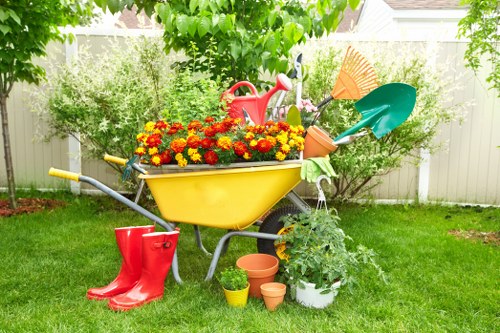 Gardening Chessington is committed to creating an eco-friendly waste disposal area and a truly sustainable rubbish gardening area that supports local biodiversity and reduces carbon emissions. Our neighbourhood approach balances practical waste separation with community reuse: we focus on diverting green waste, food scraps and dry recyclables from landfill. By building a network of low-carbon collection options and partnerships with charities, Gardening in Chessington aims to model how small-scale garden services can be both productive and planet-positive.
Our core aim is simple: to minimise waste and maximise reuse. The centrepiece of this initiative is a clear recycling percentage target: 65% recycling and composting by 2028 across all Gardening Chessington operations. This target covers materials collected at kerbside garden drop-offs, community compost bays and our appointed transfer streams. We track progress through monthly audits of garden waste streams and regular reviews of operations to ensure continuous improvement.
 The local borough approach to waste separation underpins our plans. In line with the Royal Borough's model, we separate food waste, garden waste, dry recyclables (paper, glass, cartons and cans) and residual waste. For dry recyclables we combine co-mingled collections with targeted sorting at collection points to raise capture rates of glass and fibre. Gardening Chessington integrates these systems into our service routes so that residents and community plots can benefit from consistent, borough-aligned separation routines.
Low-Carbon Vans and Sustainable Collection
To reduce emissions from logistics we operate a fleet of low-carbon vans and bicycles for small loads. Electric and hybrid vans are prioritised on all inner-urban rounds, while longer-distance trips to transfer stations use the most efficient vehicles available. We are also trialling biofuel blends and planning routes that minimise needless mileage. These measures directly reduce the carbon footprint of waste transfer and make the sustainable rubbish gardening area more than just a collection point — it becomes a low-emission operation hub for Chessington gardening activities.
 Partnerships are central to success. Gardening Chessington works with local charities and social enterprises such as Groundwork and community food redistribution groups to ensure reusable materials and surplus soil, turfs and plant pots get a second life. Bulky green waste is checked for salvageable materials: intact planters, timber and reusable compostable matter are redirected to charity projects, allotments and community gardens rather than being treated as refuse.
We also coordinate with neighbouring borough transfer stations and regional facilities to keep processing efficient and transparent. Local transfer stations serving Kingston and neighbouring boroughs handle sorted garden and green waste, while specialist anaerobic digestion facilities take suitable food waste streams. This network reduces double-handling and ensures that organic matter is processed into quality compost or energy, supporting the wider circular economy that local Gardening Chessington services depend on.
Practical Recycling Activities and Community Roles
Our sustainable rubbish gardening area supports a range of recycling activities relevant to the locality. These include:
- Garden waste composting — routed to local community compost bays and municipal composting facilities.
- Food waste diversion — separated for anaerobic digestion or community wormeries.
- Dry recycling — glass, paper, card and metals sorted to maximise recycling value.
- Re-use schemes — salvaging pots, timber and tools for charity projects.
- Safe disposal of non-compostables — small quantities managed through local transfer stations to ensure correct treatment.
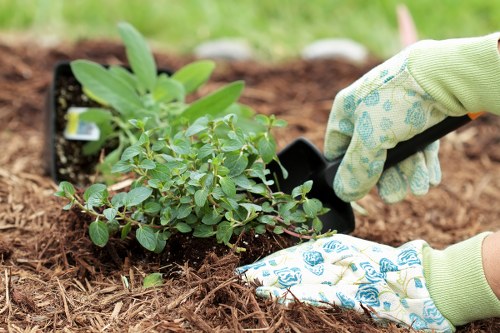 Community volunteers and Garden Champions play a key part in maintaining the sustainable rubbish gardening area. They help monitor contamination levels in bins, run monthly swap-days for usable items and assist with on-site sorting that increases recovery rates. By encouraging residents to separate food scraps and garden clippings at source, Gardening Chessington reduces contamination and helps meet our 65% recycling and composting target.
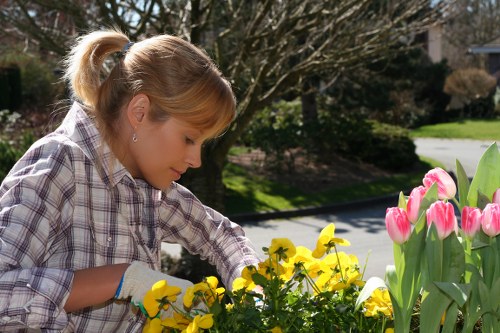 The benefits are tangible: lower disposal costs, richer soil for community allotments, fewer vehicle miles when low-carbon vans consolidate collections, and strengthened links to local charities that can put recovered materials to good use. Our approach aligns municipal best practice with grassroots action, ensuring that the sustainable gardening area is both functional and regenerative. Looking ahead, we will expand electrified vehicle use, deepen charity partnerships, and publish annual progress updates on diversion rates and carbon savings.
Gardening Chessington is not just about tidy borders and healthy plants — it is about creating an eco-friendly waste disposal area that demonstrates how urban garden care can be circular, low-carbon and community-focused. We welcome collaboration with community groups, borough services and environmental charities to scale impact and make Chessington gardening a local exemplar for sustainable waste management.
Our operational commitments include continuing to improve route efficiency for our low-emission vans, increasing local compost production from garden waste, and strengthening links with transfer stations to reduce processing time and emissions. These steps ensure Gardening in Chessington supports both local biodiversity and climate objectives.
Through targeted education, clear separation at source, and strategic partnerships, the sustainable rubbish gardening area will continue to evolve — reaching the 65% target and beyond while keeping the neighbourhood green, productive and resilient.